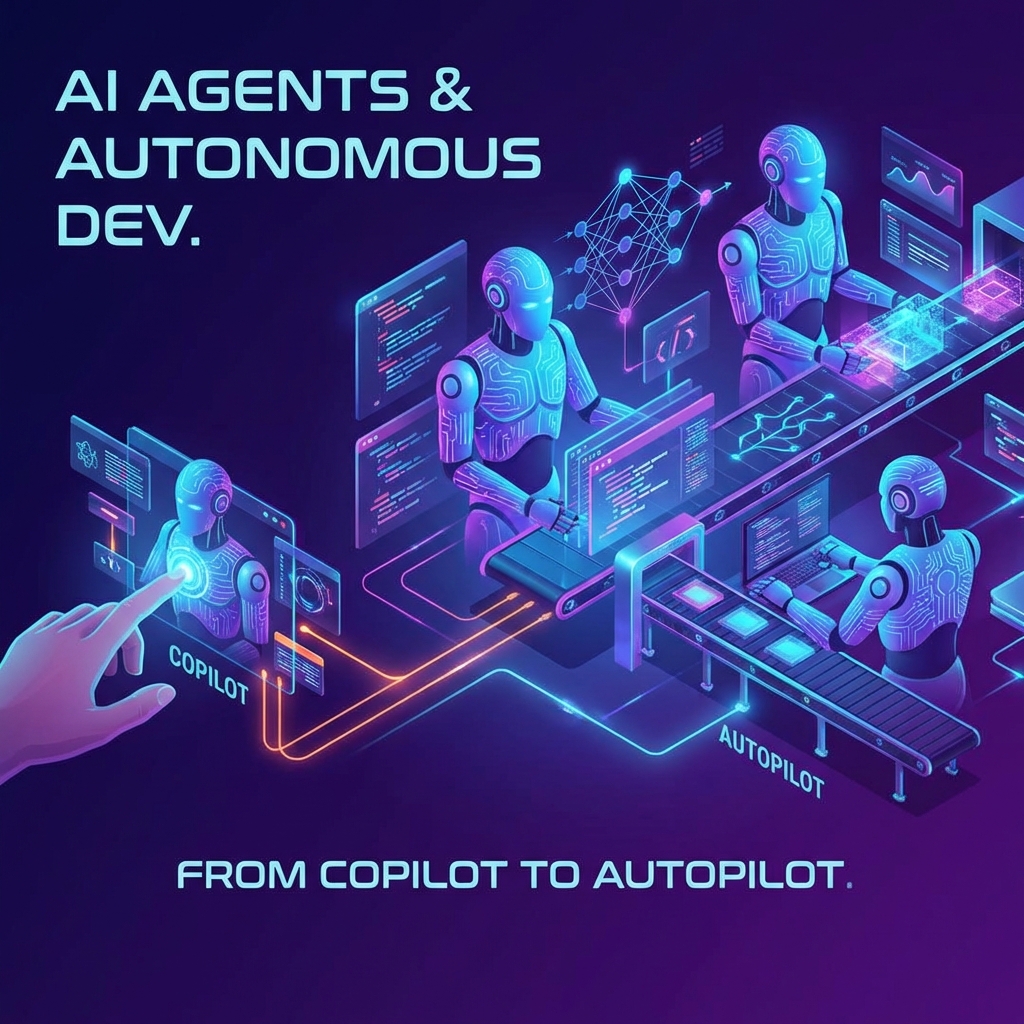
For years, AI was treated as a helpful assistant for developers. It suggested code, explained errors, and generated simple tests.
In 2026, that phase is over.
We are now entering the era of AI agents — systems capable of executing complete tasks, making technical decisions, and acting autonomously across the software lifecycle.
What changes when AI becomes an agent?
A copilot responds. An agent acts.
AI agents are goal-driven. They receive an objective and execute a chain of actions to achieve it.
Today, they can already:
- Create and refactor code
- Write and run automated tests
- Manage CI/CD pipelines
- Analyze production logs and metrics
- Fix simple issues automatically
Impact on engineering teams
Less repetitive work
Operational tasks no longer drain developers' time.
More focus on architecture and business
Developers shift from writing code to defining rules, constraints, and strategy.
Speed with consistency
Agents apply best practices consistently, reducing human error.
The evolving role of the Tech Lead
Leadership now means:
- Defining clear objectives for agents
- Ensuring observability and auditability
- Setting autonomy boundaries
- Designing human review processes
Real risks to consider
- Hard-to-audit decisions
- Poorly defined automation rules
- Over-reliance on models
Governance is key.
Conclusion
AI agents don't replace developers. They replace inefficient processes.
Software engineering is becoming AI-native.